




-optimized.jpg)









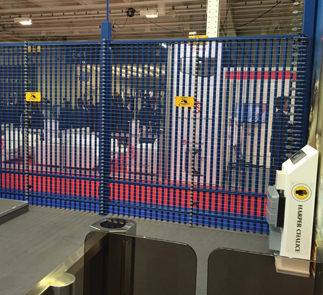
A majority (63pc) of UK companies have admitted to never testing their physical security, it’s suggested.
Fewer than half of survey respondents had heard of key security certifications, including LPCB’s LPS 1175 (45pc) and SBD (42pc), and only 38pc ever consult security experts, according to a report by fence manufacturer Jacksons Fencing. Third party certification bodies such as the Loss Prevention Certification Board (LPCB) and police initiative Secured by Design (SBD) help to provide specifiers with independently tested security products that will offer appropriate protection against forced entry depending on a site’s needs. Recently the LPCB introduced LPS 1175: Issue 8, a new performance classification system that identifies the diverse methods and attack tools used.
As for those specifying security, in Jacksons’ study, they reported the most important factor during commissioning was ‘tested and proven effectiveness’ (89pc). This shows that there is the desire to implement security, but there might not be sufficient openly available information to do so. In fact, one fifth (19pc) listed a lack of technical information as a main challenge.
One of the main benefits to LPS 1175: Issue 8 is that the new matrix style classification system, indicated by the tool category and minimum delay (minutes), offers greater flexibility and clarity when it comes to security specification. The updated classification also supports a proportionate, layered approach to security specification, helping to facilitate far more economical specification of forced entry protection.
Simon Folwell, Security Consultant at Jacksons Fencing, says: “We understand the daunting task facing those within the security buying chain who might not have a formal security background. It is a complex matter, demanding a thorough understanding to successfully navigate its challenges, as the security landscape is constantly evolving.
“However it is worrying that there seems to be a distinct lack of motivation from some companies to take the initiative to properly secure their premises. Thankfully Issue 8 should deliver a greater depth of understanding for those specifying security solutions, a much needed addition to LPCB’s stringent certification process.”
About LPS 1175: Issue 8.0:
What is LPS 1175?:
•LPS 1175 is widely used by specifiers and regulators around the world as a means for verifying the delay to forced entry provided by physical security equipment.
•LPS 1175: Issue 8 defines a new performance classification system that recognises the increasingly diverse relationships between the tools a hostile actor is likely to use and the time they are likely to spend completing the attack.
What does the revision mean?:
•The previous single digit performance classifications (i.e. security ratings 1 to 8) has been extended to one formed of two elements that classify performance in terms of:
oThreat level (first element) – Define by letters A – H which correspond to the tool kit used to evaluate resistance to attack and number of attackers involved.
oDelay (second element) – Numeric value (1, 2, 3, 5, 10, 15 or 20) corresponding with the minimum delay (in minutes) provided by the product when placed in a locked condition.
•This change means that there are 48 possible combinations of threat and delay
•Using a layered approach, it is more likely that if there was a requirement for a 10 minute delay, that two layers of ‘F5’ products would be used rather than using one layer of ‘F10’.
Issue 8 equivalencies:
oA1 = SR 1
oB3 = SR 2
oC5 = SR 3
oD10 = SR 4
oE10 = SR 5
oF10 = SR 6
oG10 = SR 7
oH20 = SR 8
•A & B loosely based upon domestic and low commercial risks
•C & D based on commercial risks
•E & G based on high security risks
•G & H based on extremely high security risks.



