


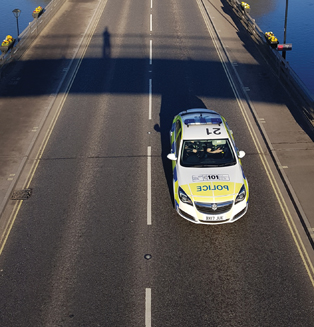
A project by the University of Huddersfield aims to provide a snapshot of policing amidst the global coronavirus pandemic. The uni has been awarded funding from the National Police Wellbeing Service (NPWS, Oscar Kilo for short) to carry out the research.
The University’s Director of the Applied Criminology and Policing Centre, Professor Jason Roach, is to lead a team that with the NPWS will look to what extent the health and wellbeing of the nation’s police officers have been affected. Roach recognised how research into the well-being of NHS staff working during the pandemic was well documented, but the same couldn’t be said for the nation’s police officers, whether psychologically, emotionally or physically.
Working alongside him will be Dr Michelle Rogerson, Dr Melanie Flynn, Dr Ashley Cartwright plus two PhD researchers Liam Curran and Rebecca McCarthy. Their survey will include general questions such as how the officers felt doing their job during the various phases of Lockdown.
Roach said: “For example, during the initial phases when no-one could be outside, the rules of social distancing where clear and easier for police to enforce, ‘Stay at home, Save Lives. Protect the NHS’, compared to when the relaxing of the rules happened. We’ll be asking how they dealt with enforcement in the potential vagueness of it all.”
The survey will be disseminated by the NPWS to potentially thousands of police staff across England and Wales. “The police force as a whole has come on leaps and bounds over the last five years when dealing with staff mental health and wellbeing issues,” said Professor Roach. “However, some forces are further down ‘the wellbeing road’ than others, so we are likely to get different responses from staff from different forces and working in different roles.”
The project will then interview UK police staff, to identify personal accounts of working in policing during the pandemic and to acquire more details relating to findings from the survey.
Roach said that while the survey will identify ‘the what’ the project will need to talk with police staff to understand ‘the why’. As well as identifying negative effects impacting on UK police staff wellbeing during the pandemic, the researchers will be searching for more positive factors relating to how individuals coped with the negative impact on their wellbeing from working. For example, which coping strategies they used, was it exercise and talking with colleagues, or if there was any specific support provided by their police forces.