-optimized.jpg)








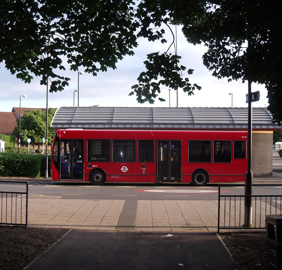
As we exit the second national lockdown, the economy starts to open up and a vaccine programme appears on the horizon, we need to make sure that the recovery from the pandemic is a green one. This means that a return to mobility is based around public transport, cycling and walking and not around cars.
During a webinar by the business group Resilience First, Vernon Everitt, Managing Director, Customers, Communication and Technology, Transport for London (TfL), made clear that it was untenable for the recovery from Covid-19 to be based around a car-led recovery.
Robert Hall, Executive Director, Resilience First, said: “Pandemics are nothing new to the capital or the transport within. The Coronavirus of 2020 has highlighted the complexity and vulnerability of a modern transport system in a major city like London. Without any physical damage to the system itself the virus has wreaked havoc on a fair revenue system that has traditionally sustained the network.”
“The result has been a large cash injection from the government to sustain it for the short term so we all have an interest in understanding what the future holds beyond the immediate crisis brought about by Covid-19.”
Maryrose Page, Chief Engineer, Transportation, Atkins, chairing the webinar, said: “TfL’s open data sharing policy supports SMEs and the supply chain in developing mobility-as-a-service applications and the Internet of Things. The challenge is to move from a reactive stance to proactive engagement with technology innovations.
“London has kept moving through the pandemic, albeit at a different pace but with a new green recovery backdrop, which is welcome considering the climate agenda. The challenge now is to understand the ‘new normal’ demands and build on the green recovery momentum with technology innovations.”
Vernon Everitt, Managing Director, Customers, Communication and Technology, Transport for London, said: “The pandemic has turned our business on its head. At one point, Tube ridership was down to about 3pc of normal and buses were down to about ten to 15pc of normal ridership. That is the lowest level of travel we have seen in 100 years.”
“As lockdown restrictions are eased, we have brought in extensive measures that will continue to provide a clean, safe and reliable network for customers and staff. Prior to the second lockdown, ridership had recovered to nearly 40% on Tube and 60% on buses. We are asking customers to plan ahead and travel during the quiet times. These are currently between 08:15 and 16:00 and after 17:30 on weekdays, and before noon and after 18:00 on weekends on public transport.”
“We must ensure that London’s recovery is clean, green and sustainable. If people shift to using their cars the city will grind to a halt and the progress we have made in improving air quality will reverse. To strengthen congestion and air-quality improvements, we have reintroduced the Congestion Charge and applied it seven days a week and extended its hours on a temporary basis. In October 2021 the ULEZ zone will be extended to the whole of the north and south circular zone.”
“In the longer term, the strategic direction for the city has to be founded on high-quality public transport and more active travel facilities like walking and cycling. And real money is being put behind the walking and cycling agenda.”